
Image credit: Photo by Jesse van Vliet on Unsplash
Diving isn't a solo sport — and for good reason. The buddy system is one of the most fundamental principles of scuba diving safety. Whether you’re a beginner or a seasoned diver, understanding and applying it properly can be the difference between a smooth dive and a potential emergency.
What is buddy system?
The buddy system means diving in pairs — you and your dive buddy are responsible for assisting and looking out for each other underwater. It's a mutual safety net: if something goes wrong, help is only an arm’s length away.
Why is the buddy system so important?
Emergency support
If you run out of air, get entangled, or experience equipment failure, your buddy is your immediate lifeline.
Shared awareness
Two sets of eyes are better than one when it comes to navigation, spotting hazards, or marine life.
Accountability
Having someone by your side increases focus and helps prevent risky behavior.
Emotional reassurance
Knowing you're not alone builds confidence — especially in unfamiliar conditions.
Don’t skip the buddy check!
Before every dive, run through a pre-dive safety check — often remembered by the acronym BWRAF (PADI) or a similar version:
USEFUL TIP
Take this seriously. A 2-minute check can prevent serious issues underwater.
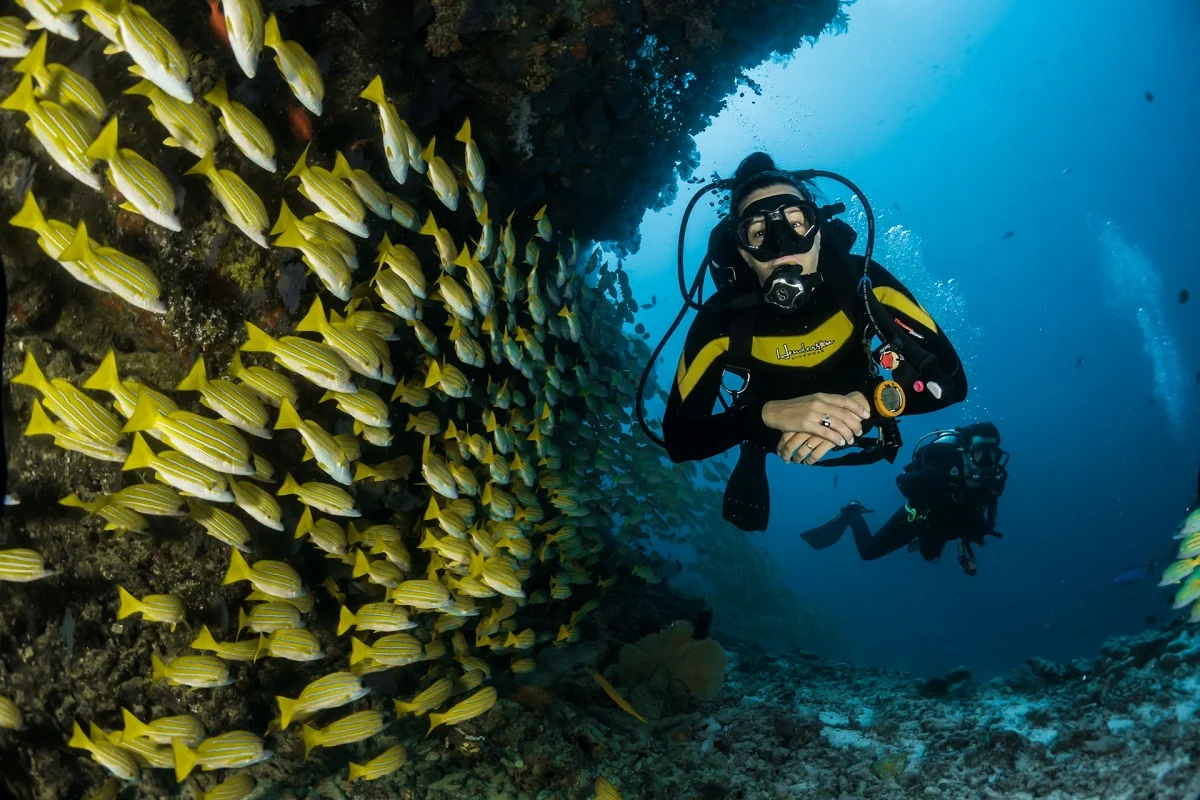
Image credit: Photo by Sebastian Pena Lambarri on Unsplash
My personal “save a dive” experience
Daedalus reef, Red Sea, Egyt - 2024
Getting ready for another dive at this great location, I have been occupied to make sure I have gear ready to capture all action that we hope for underwater. My mind was occupied by setting the camera.
When we got to the buddy check, all seemed sorted for me - let§s I thought. It was at that moment my buddy raised the question: Where is your weight belt man? I realized that getting my camera ready I neglected one of the most important things. No weights, no dive, no action - no camera needed.
A day later a zodiac boat left loaded by a group of divers toward the remote side of the reef, coming back in 10 minutes with one of them still on the board. What’s wrong I asked… Well, I jumped off the boat and could not dive, I forgot my weights… That’s -1 dive I paid for.
Basic buddy rules during a dive
Stay close
Stay close and visible to each other: Maintain visual contact and be within reach — usually no more than a few meters apart. Sometimes, some divers tend to prefer being above and behind their buddy. The truth is, this is the worst place to be. It's right in your buddy’s blind spot. He cannot see you, he does not know where you are. Not a good situation. Pick your side and stay there.
Communicate
Communicate often. Use hand signals regularly to check in with each other. Although set by a diving standard, make sure you use the same signals, at least the basic ones.
Dive the same plan
Agree on depth, time, and route — and stick to it. Looking for your buddy in the middle of the dive is not what you have come for.
Share the experience
From cool marine sightings to currents or discomfort, keep each other in the loop. Together, we have 4 eyes
Assist if needed
If your buddy shows signs of stress, equipment issues, or disorientation — be there. This only emphasises the first point - stay close. If you are far and your buddy has a problem with air, you are of no use. You have to make sure you're there if needed.
Choose you buddy carefully
No matter how experienced you are, never underestimate the value of a reliable dive buddy. A good buddy can save your dive — or even your life. Respect the system, and practice it every time you dive.
How to choose your buddy?
There’s no guarantee that everything will go as planned during a dive. When faced with unexpected circumstances it’s reassuring to have someone by your side underwater.
Having a reliable buddy is invaluable and can make all the difference in extreme situations, potentially even between life and death. Your buddy is your safety net.
FAQ
Why is having a diving buddy important?
A diving buddy is there to help you handle unexpected situations underwater, from equipment problems to moments when you feel uncomfortable or unsure. Diving with a buddy also means sharing the experience with someone who can look out for you. A good buddy makes a dive safer and more enjoyable, but both divers need to take responsibility for their own safety.
How do I choose the right diving buddy?
Look for someone you can trust, communicate with, and feel comfortable around. Your experience levels, diving skills, and expectations should be compatible, too. You don't have to be best friends or have the same number of dives, but you should feel confident working together and speaking up whenever something doesn't feel right.
What should diving buddies discuss before a dive?
Talk through the dive plan, including the route, depth, expected duration, and air-supply limits. Make sure you both understand the hand signals, know how to check each other's equipment, and agree on what to do if you get separated or something goes wrong. It's much easier to make good decisions underwater when you've already discussed them on the surface.
What should I do if I get separated from my diving buddy?
Follow the lost-buddy procedure agreed upon during your pre-dive briefing and the procedures you were taught in your training. Don't search indefinitely or exceed your depth, air, or decompression limits trying to find your buddy. If you can't reunite within the agreed time, follow your training and the dive plan for ending the dive safely.
Where can I find a diving buddy?
If your friends don't dive, try a local dive club, a reputable dive centre, or a diving community online. Guided group dives and training courses are also good opportunities to meet other divers. Before committing to a dive together, take time to discuss your experience, skills, and expectations to see whether you're a good match.