
Image credit: Photo by Mitchel Wijt on Unsplash
Here is the breakdown of what can go wrong, and how to avoid it.
1. Poor Buoyancy Control
The mistake
Sinking too fast or floating too high, often due to over-weighting or lack of breath control.
Why it’s a problem
Uncontrolled buoyancy can lead to poor trim, reef damage, high air consumption, and even injuries from accidental ascents or descents. It also affects your confidence underwater.
How to improve
Master your breathing. With good control, you can adjust your position using just your breath. For example, breathe in to float slightly up over an obstacle; breathe out to descend gently. Always do a proper weight check before each dive.
Consider taking a Peak Performance Buoyancy course to fine-tune your skills.
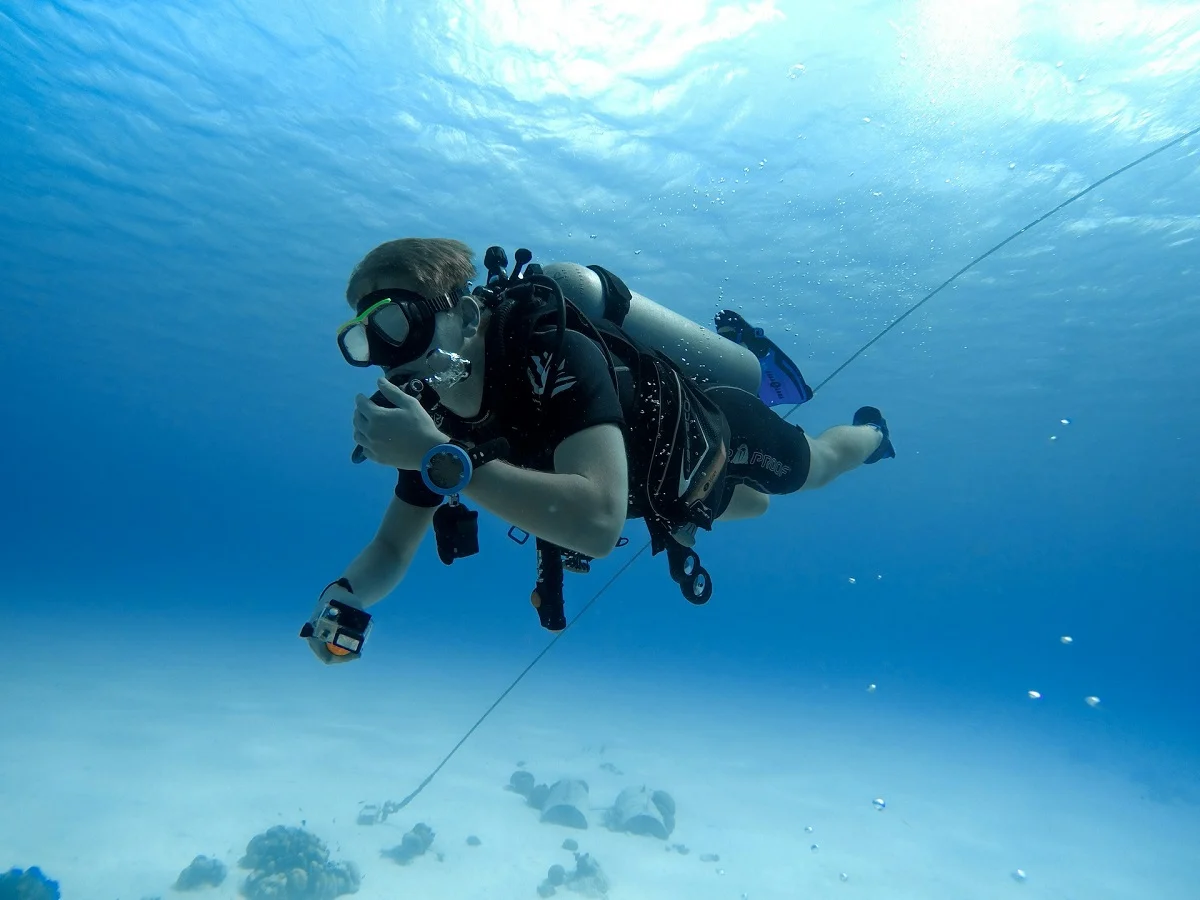
Image credit: Photo by Jesse van Vliet on Unsplash
2. Not Equalizing Early and Often
The mistake
Descending without clearing your ears—or forcing it when it’s already painful.
Why it’s a problem
Can lead to barotrauma, ear pain, or even ruptured eardrums—cutting your dive short or risking long-term damage.
How to improve
Start equalizing before your descent.
Equalize gently and frequently—before discomfort starts.
Never push through pain.
Descend slowly and feet-first if needed.
If equalization feels difficult, ascend slightly and try again. If the issue persists, it’s safer to abort the dive.
3. Over-Kicking and Using Arms
The mistake
Kicking constantly, swimming with your hands, or flailing unnecessarily.
Why it’s a problem
It wastes energy and air, stirs up sediment, and reduces control. Plus, it often scares away marine life.
How to improve
Use slow, controlled fin kicks. Every unnecessary movement burns energy and air.Keep your arms—and your gear—tucked in. Practice proper trim and horizontal positioning. Being horizontal reduces drag (resistance in the water), making you more efficient.
4. Skipping Gear Checks
The mistake
Relying entirely on your buddy or dive guide to check your equipment.
Why it’s a problem
Missed issues like tangled hoses or low air can lead to panic or dangerous situations underwater.
How to improve
Always do your own pre-dive check.Use the BWRAF system: BCD, Weights, Releases, Air, Final check. Get familiar with your setup—especially if you're using rental gear.
TIP
There are fun ways to remember BWRAF. Try using a phrase like “Bruce Willis Ruins All Films” (no offense, Bruce—you’re just helping us stay safe!).
👉 Read more about buddy check in Buddy System Explained!
5. Ascending Too Quickly
The mistake
Rushing to the surface without monitoring your speed or making a safety stop.
Why it’s a problem
This increases your risk of decompression sickness or lung overexpansion—two of the most serious diving injuries.
How to improve
Ascend no faster than 18 meters (60 feet) per minute. Always do a 3-minute safety stop at 5 meters (15 feet). Monitor your dive computer or depth gauge carefully during ascent.
DID YOU KNOW?
A slow, controlled ascent gives nitrogen time to safely leave your body and protects your lungs and tissues.
How to become a better diver
Becoming a better diver isn't about collecting higher qualifications. Real mastery comes with experience and practice. As the saying goes, practice makes perfect.That said, advanced scuba training introduces you to new skills and techniques that can help you grow as a diver.
Curious about what you can learn? Take a look at what advanced training has to offer.
Final advice
Now you're familiar with top 5 mistakes beginner scuba divers make. Mistakes are part of learning—but staying informed and practicing good habits makes your dive journey safer and more enjoyable. With time and awareness, you’ll dive with more confidence and control.Happy diving—and remember: confidence comes with bubbles, not with rushing.
Happy diving—and remember: confidence comes with bubbles, not with rushing.
FAQ
What are the most common mistakes beginner scuba divers make?
Common mistakes include poor buoyancy control, forgetting to equalize early, over-kicking, skipping equipment checks, and ascending too quickly. Learning good habits early makes diving safer and more enjoyable.
How can beginner scuba divers improve their buoyancy?
Practice controlled breathing, check your weighting, and make small adjustments to your BCD instead of constantly moving your arms and legs. Good buoyancy takes time, so keep practising and ask your instructor for feedback.
Why is it important to equalize your ears early when scuba diving?
Water pressure increases as you descend, so equalizing early and often helps prevent ear pain and pressure-related injuries. Never force equalization or continue descending if you feel pain.
Why should scuba divers check their equipment before every dive?
A pre-dive equipment check helps identify problems before you enter the water and confirms that you and your buddy are ready to dive. Even when diving with a guide, you should always check your own equipment.
How fast should you ascend when scuba diving?
Follow your dive computer, training and dive plan, ascending slowly and under control; many recreational training standards use a maximum rate of 9 metres (30 feet) per minute. Follow the required safety-stop procedures and never hold your breath during ascent.