The Underwater Grasslands of Our Oceans
Seagrass Meadows
Seagrass is one of the most important, yet often overlooked, marine habitats. These underwater grasslands can be found in shallow coastal waters around the world, where they form extensive meadows that support a remarkable variety of marine life.
Unlike seaweed, which is a type of algae, seagrass is a true flowering plant. It has roots, stems and leaves, and reproduces through flowers and seeds. Its roots and underground stems, known as rhizomes, anchor the plants to the seabed, allowing them to spread and form dense underwater meadows.
What is seagrass
Unlike seaweed, which is a type of algae, seagrass is a true flowering plant. It has roots, stems and leaves, and reproduces through flowers and seeds. Its roots and underground stems, known as rhizomes, anchor the plants to the seabed, allowing them to spread and form dense underwater meadows.
Although they may look like ordinary grass growing beneath the surface, seagrass meadows are incredibly productive ecosystems. They provide food and shelter for marine animals, help maintain water quality and play an important role in protecting our coastlines.
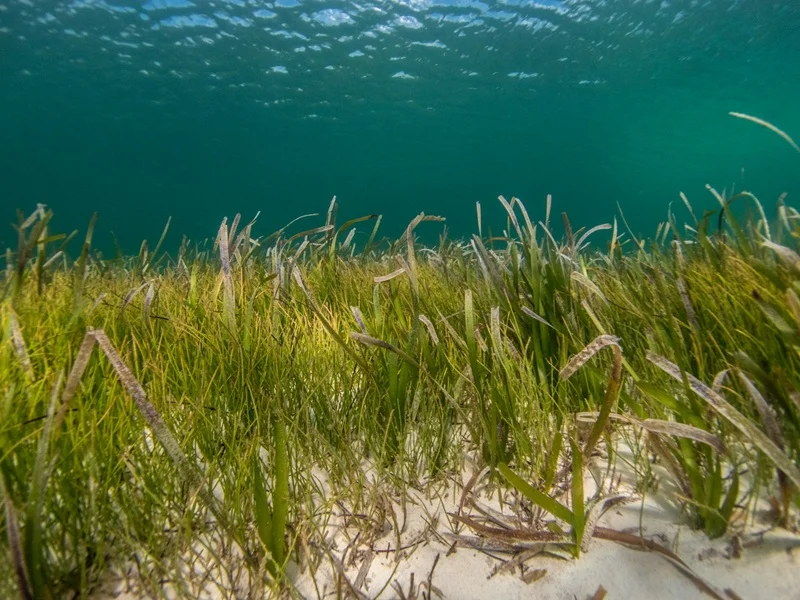
Image credit: Photo by Benjamin L. Jones on Unsplash
Why are seagrass meadows important?
Seagrass meadows are much more than just underwater vegetation. They provide essential services that help maintain the health of coastal ecosystems and support marine life.
A natural home for marine life
Seagrass meadows create a sheltered environment where many marine animals can find food, hide from predators and reproduce. Their dense leaves provide protection for smaller fish and invertebrates, making them particularly important as nursery grounds for juvenile marine life.
Many species depend on these habitats throughout their lives, while others visit them to feed or find shelter. Seagrass meadows also support commercially important fish populations, making them valuable to both marine biodiversity and local fisheries.
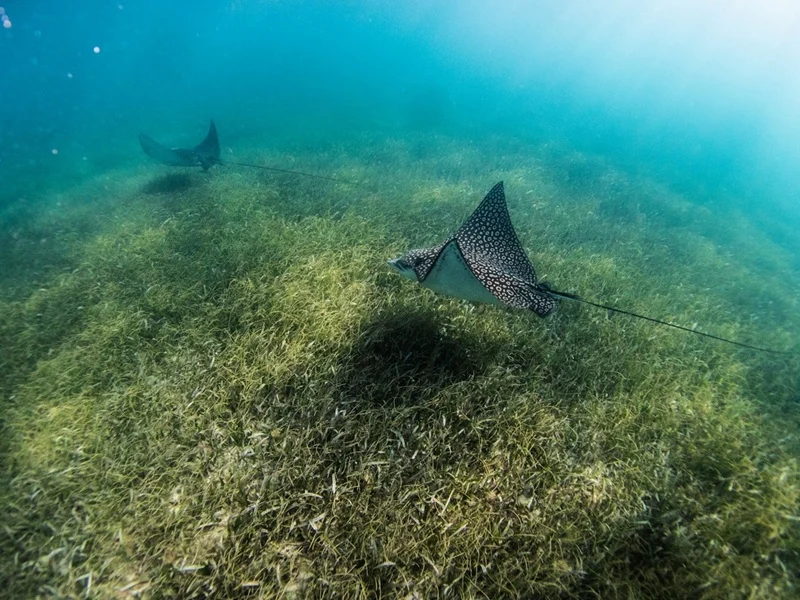
Image credit: Photo by Benjamin L. Jones on Unsplash
Natural carbon storage
Seagrass is an important part of what scientists call blue carbon – carbon captured and stored by coastal and marine ecosystems.
Through photosynthesis, seagrasses absorb carbon dioxide from the water. Some of this carbon becomes part of the plant itself, while additional organic material accumulates in the seabed. Because seagrass roots and rhizomes help trap and retain sediments, carbon can remain stored in these underwater deposits for long periods.
This makes healthy seagrass meadows valuable natural carbon stores and an important part of the wider effort to address climate change.
Protecting our coastlines
The benefits of seagrass extend beyond the underwater world. Its extensive root systems help hold seabed sediments together, reducing their movement and helping to stabilise coastal areas.The leaves also slow down water movement and reduce wave energy as it passes through the meadow.
Together, these effects help limit sediment disturbance and contribute to natural coastal protection.
Keeping the water clear
Seagrass meadows help maintain water quality by trapping suspended particles and taking up nutrients from the surrounding water.By reducing the amount of sediment that remains suspended, they can improve water clarity and help create conditions that benefit other marine habitats, including nearby coral reefs.
They are also part of a wider coastal ecosystem in which seagrass meadows, mangroves and coral reefs can support one another. These habitats are often connected, with marine animals moving between them during different stages of their lives.
Marine ecosystems
Marine ecosystems are diverse underwater and coastal habitats that support countless species and provide essential services for humans and the ocean.
From vibrant coral reefs to protective mangrove forests and underwater seagrass meadows, each ecosystem plays a vital role in maintaining ocean health.
Dive in to explore the connections between these unique habitats.
Marine life that depends on seagrass
For divers and snorkelers, seagrass meadows offer a chance to discover a different side of marine life. They may not have the colourful appearance of coral reefs, but a closer look reveals a surprisingly rich underwater habitat. Some marine animals depend on seagrass directly for food, while others use it as a nursery, hunting ground or place to hide.
Green Sea Turtles (Chelonia mydas)
Green sea turtles are among the best-known animals associated with seagrass meadows. They feed on seagrasses and algae, particularly as adults, making these habitats an important part of their feeding grounds.
Dugongs (Dugong dugon)
Often called sea cows, dugongs are marine mammals that feed primarily on seagrass. They graze across shallow meadows, using their specialised snouts to uproot and consume seagrass.
Manatees (Trichechus spp.)
Like dugongs, manatees are herbivorous marine mammals that feed on aquatic vegetation, including seagrass. They are particularly associated with shallow coastal and estuarine habitats.
Seahorses (Hippocampus spp.)
Seagrass provides shelter for many seahorse species. Their ability to grip vegetation with their tails helps them remain in place while blending into their surroundings, making them difficult to spot.
Fish and other marine animals
Many juvenile fish use seagrass meadows as nursery habitats, where the vegetation provides shelter from predators. Invertebrates, crustaceans and molluscs also find food and protection among the leaves and surrounding seabed.
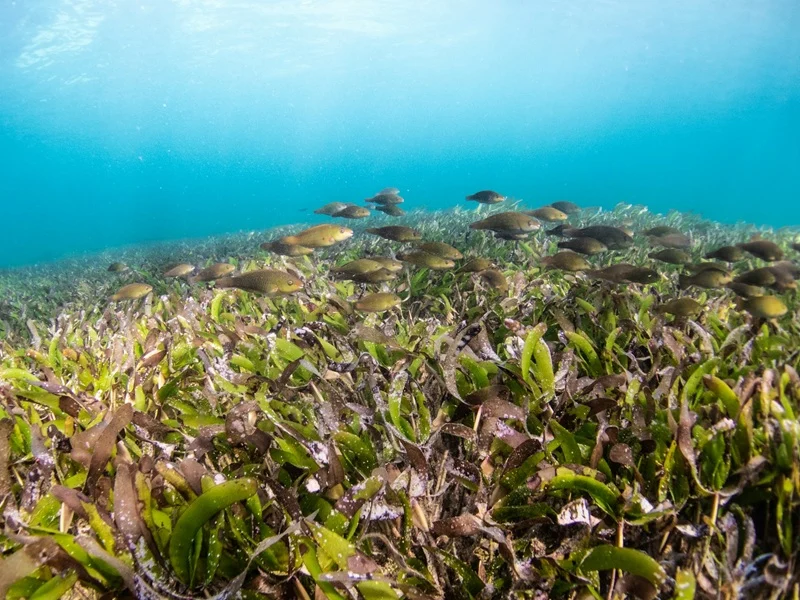
Image credit: Photo by Benjamin L. Jones on Unsplash
Why are seagrass meadows disappearing?
Despite their ecological importance, seagrass meadows are under increasing pressure from human activities and environmental changes.Unlike some marine habitats, seagrass can be particularly sensitive to changes in water quality and physical disturbance. Once damaged or lost, recovery can be slow and difficult.
The main threats include:
Coastal development
Construction along coastlines, land reclamation and dredging can directly destroy seagrass habitats. These activities may also increase sediment in the water, reducing the amount of sunlight reaching the plants.
Water pollution
Agricultural runoff, untreated sewage and other sources of pollution can introduce excessive nutrients into coastal waters. This can encourage algal growth, increase water turbidity and reduce the light available for seagrass to photosynthesise. In heavily affected areas, these conditions can lead to the deterioration or complete loss of seagrass meadows.
Climate change
Rising sea temperatures and changes in coastal conditions can put additional pressure on seagrass ecosystems. Extreme weather events can also physically disturb meadows, while changes in water chemistry may affect the plants and the wider habitats they support. The effects vary between regions and seagrass species, but climate change adds another challenge to already pressured coastal ecosystems.
Physical damage
Seagrass meadows can be damaged by activities that disturb the seabed. Boat anchors, propellers, dredging, bottom trawling and other destructive fishing practices can uproot plants and leave scars in the meadow.Repeated disturbance can fragment seagrass habitats and make natural recovery more difficult.
DID YOU KNOW?
Seagrass meadows cover only around 0.1% of the ocean floor, yet they store a disproportionately large amount of the carbon held in marine environments. According to United Nations estimates, almost 30% of known global seagrass area has disappeared since the late nineteenth century.
This historical loss highlights just how much pressure these valuable coastal habitats have experienced. Despite this decline, seagrass meadows can recover when the main sources of damage are reduced and suitable conditions return. Protecting existing meadows is therefore just as important as restoring those that have already been lost.
Seagrass conservation – Why protection matters
Protecting seagrass meadows is not only about preserving one type of marine plant. It is about maintaining the wider coastal ecosystems that depend on them.Reducing water pollution, improving wastewater treatment, managing coastal development and limiting physical damage from boats and fishing activities are all important steps towards protecting these habitats.
Restoration projects can also help bring damaged meadows back, although success depends on the local environment, the seagrass species and whether the original causes of degradation have been addressed.For divers and ocean enthusiasts, awareness is another important part of conservation. Avoiding contact with seagrass while diving or snorkelling, respecting protected areas and choosing responsible boating activities can help reduce unnecessary damage.
Final thoughts
Seagrass meadows may not always receive the attention given to coral reefs or mangrove forests, but their importance to marine ecosystems is undeniable. They provide food and shelter for marine life, support fisheries, store carbon and help protect coastlines.
They are also a reminder that some of the most valuable marine habitats are not necessarily the most spectacular at first glance.T he next time you swim or dive over a seagrass meadow, take a closer look. There is much more happening beneath the surface than you might expect.Protecting these underwater grasslands means protecting the wildlife, coastal communities and marine ecosystems that depend on them.
FAQ
Is seagrass a plant or a type of seaweed?
Seagrass is a true marine flowering plant, not seaweed or algae. It has roots, leaves and underground stems called rhizomes, and reproduces through flowers and seeds.
What animals live in seagrass meadows?
Seagrass meadows provide food and shelter for many marine animals, including seahorses, juvenile fish, crabs, green sea turtles and dugongs. Many species also use these underwater habitats as nursery grounds or feeding areas.
Why is seagrass important for the environment?
Seagrass meadows support marine biodiversity, improve water quality, stabilise seabed sediments and help protect coastlines. They are also important blue carbon ecosystems, storing carbon in their plants and the underlying sediment.
What are the biggest threats to seagrass meadows?
Coastal development, water pollution, climate change and physical damage from boat anchors, propellers and destructive fishing activities are among the main threats. These pressures can destroy seagrass habitats and make natural recovery difficult.
Can damaged seagrass meadows recover?
Yes, seagrass meadows can recover naturally or through restoration projects when the main causes of damage are addressed. However, recovery can take years and depends on suitable environmental conditions and the health of the surrounding ecosystem.
ENJOYED THIS?